Our Journey

Origins

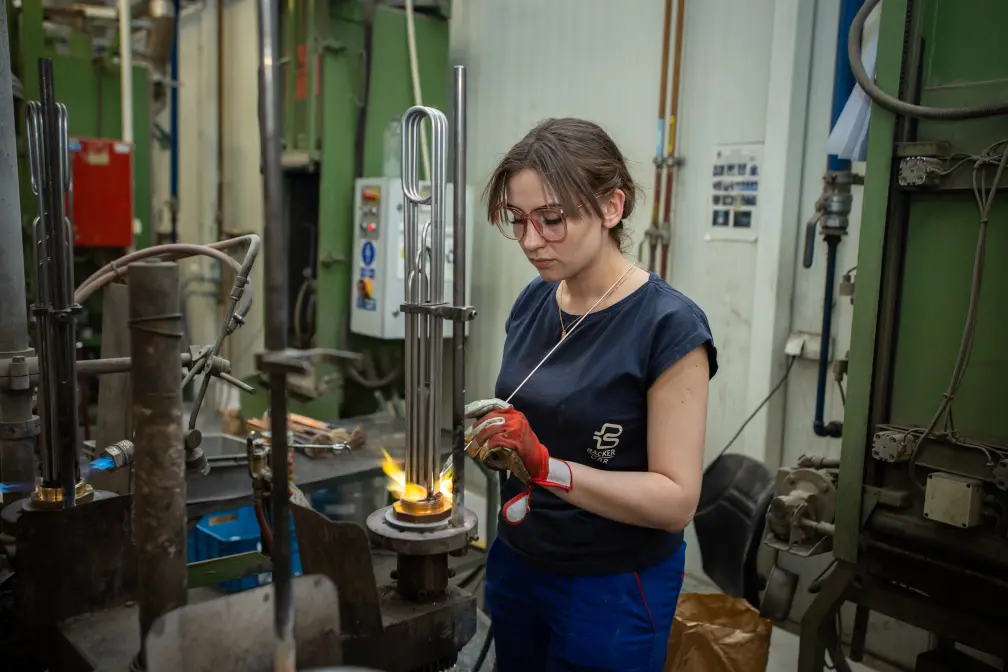
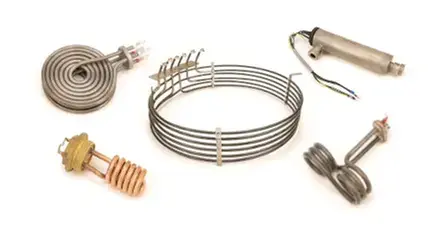
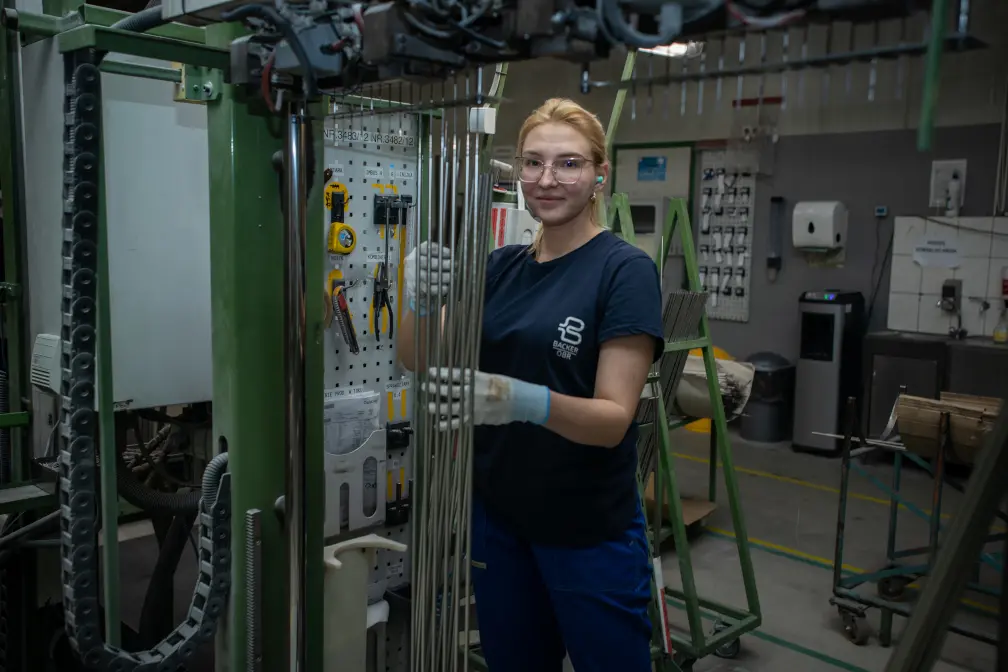
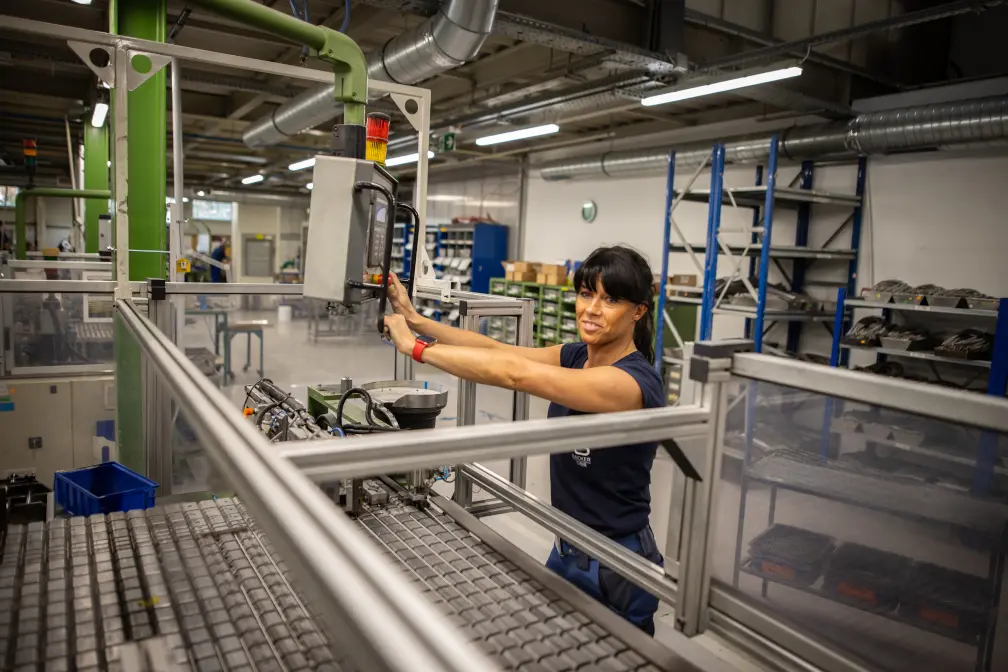
Our company was founded in 1991 in Szczecin under the name OBR Sp. z o.o. From the very beginning, our core business has been the production of tubular heating elements based on the technology patented in 1921 by Christian Backer.
1991
THE FOUNDING OF OBR
We launched the production of tubular electric heating elements, achieving a monthly output of several thousand units.
1992
PARTNERSHIP WITH BACKER ELEKTRO-VÄRME
We initiated cooperation with the Swedish company Backer Elektro-Värme AB, based in Sösdala. We also obtained the VDE certification for our manufactured products.
1995
NEW COMPANY HEADQUATERS
We relocated from Szczecin to Pyrzyce, moving into purchased buildings with a floor area of approximately 1,200 m².
1996
FIRST MILLION PIECES!
We reached an annual production output of 1 million heating elements.
1997
JOINING THE BACKER GROUP AND ISO 9001 CERTIFICATION
We became part of Backer Elektro-Värme AB and changed our name to Backer OBR Fabryka Elementów Grzejnych Sp. z o.o. We implemented a Quality Management System compliant with ISO 9001:1994 and successfully obtained certification from Bureau Veritas Quality International.
2000
EXPANSION AND NEW TECHNOLOGY
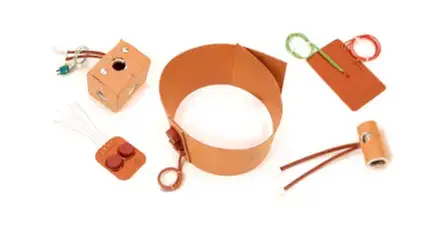
As part of our next investment phase, we expanded our production area to 7,000 m². We also launched the manufacturing of foil heaters.
2003
NEW TECHNOLOGIES
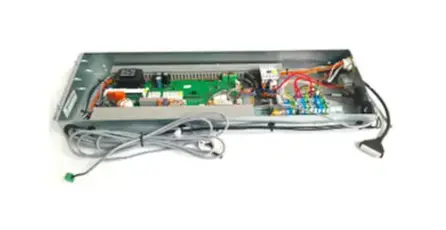
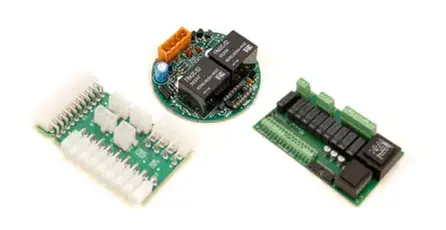
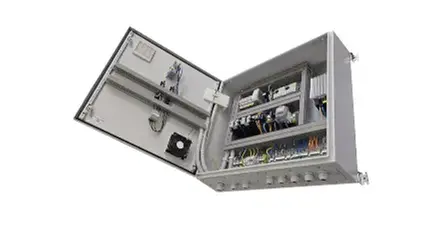
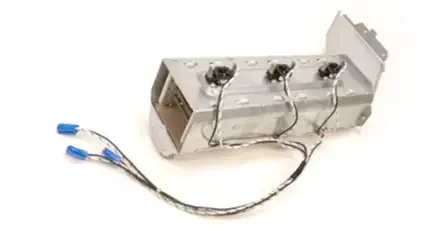
We launched the production of resistors and control panels. We changed the company name to Backer OBR Sp. z o.o. We sold over 3 million units of tubular heating elements.
2004
NEW TECHNOLOGY AND NEXT RECORD
We launched the production of open coil heating elements. We increased our annual sales of tubular heaters to over 5 million units.
2005
NEW PLANT AND NEW TECHNOLOGY
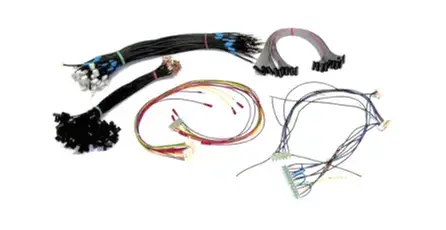
We launched a newly built production plant in Stargard. We also started the manufacturing of wire harnesses.
2007
EXPANSION OF THE CERTIFICATION PORTFOLIO
We implemented an Environmental Management System and an Occupational Health and Safety Management System compliant with PN-ISO 14001:2004 and PN-N-18001:2004 standards, and successfully obtained certification from Bureau Veritas Certification.
2008
EXPANSION OF THE STARGARD PLANT
We expanded our production plant in Stargard to accommodate the manufacturing of resistors, control panels, and open coil heating elements, thereby bringing our total production area to over 20,000 m²
2012
NEW TECHNOLOGY
We launched the production-scale assembly of control systems based on printed circuit boards (PCBs).
2013
PYRZYCE PLANT EXPANSION
We commissioned another new production hall, covering an area of 4,500 m², dedicated to the manufacturing of tubular heating elements.
2015
TERMORAD ACQUISITION
We acquired Termorad, a Radom-based manufacturer of tubular heating elements for the railway sector, refrigeration industry, and general manufacturing.
2016
EXPANSION OF THE STARGARD PLANT
We expanded the Stargard plant by commissioning another 3,000 m² production hall, complete with social and office facilities.
2017
NEW TECHNOLOGIES
We launched the production of stone heaters. We implemented an automated production line for the finishing of tubular heating elements. We upgraded our research laboratory within the tubular heating elements facility.
2018
NEW PLANT IN STARGARD
We acquired a new location in Stargard for our resistor production plant.
2019
STARGARD PLANT UPGRADE
We modernized the open coil heating elements and control systems plant in Stargard.
2020
NEW PRODUCT
We launched the production of specialized silicone foil heaters for the automotive industry.

The origin of the name BACKER

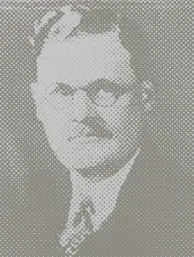
We can proudly say that we are direct successors to the legacy and technical expertise of the man who first invented and later patented the design of the tubular heating element. That man was Christian Backer – a Norwegian engineer who, while working as an assistant at the Technical University in Trondheim (Central Norway), focused on extracting chemically pure magnesium (Mg) from seawater. During his research, he demonstrated that pure magnesium – a chemical element that is a metal and thus an electrical conductor – could be transformed into a material that proved to be one of the best electrical insulators, while simultaneously remaining an excellent thermal conductor at both low and high temperatures. This material, still used in tubular heating elements to this day, is magnesium oxide (MgO).
Backer process

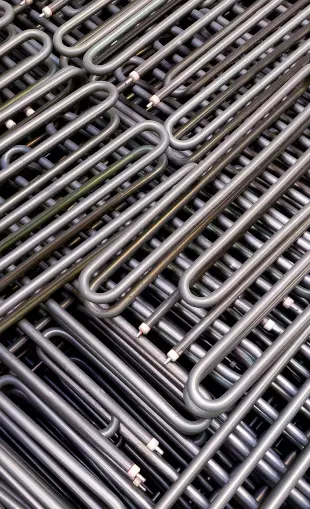
To manufacture a tubular heating element, a stretched resistance wire along with magnesium had to be placed concentrically inside a protective tube, and the electrically conductive magnesium then had to be transformed into an insulator. Christian Backer solved this problem by placing the heating element inside an autoclave and subjecting it to elevated pressure at a high temperature. As a result, the magnesium was converted into magnesium hydroxide, which was subsequently transformed into magnesium oxide during a high-temperature baking process, with water being removed from the inside of the heater. This solution became known as the Backer Process. This and several subsequent patents by Christian Backer led to the creation of a sufficiently reliable and safe tubular heating element, which was destined to become an alternative to gas ovens.
Backer elements

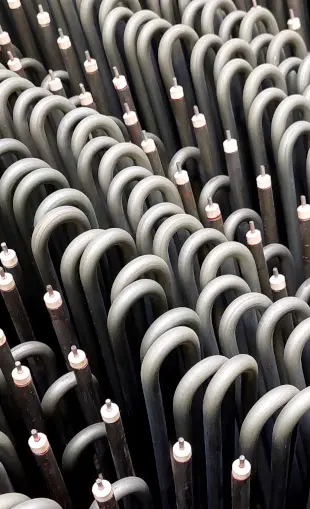
Christian Backer emigrated to Canada and conducted further experiments in Ottawa to develop a complete production concept for tubular heaters. Once the technology and production methodology were finalized, he began selling manufacturing licenses based on his method. After World War II, he started operations in Sweden, co-founding Backer Electro Varme AB in 1949 with Nils Bernerup (who later founded NIBE Verken in Markaryd). Backer products derive from the technical principles outlined in his patent published in 1921: - the resistance wire is positioned centrally inside the protective tube - the space between the tube and the resistance wire is filled with magnesium oxide - after filling, the heater is compacted (swaged) and subsequently sealed Heating elements manufactured this way are also known as "Backer elements".